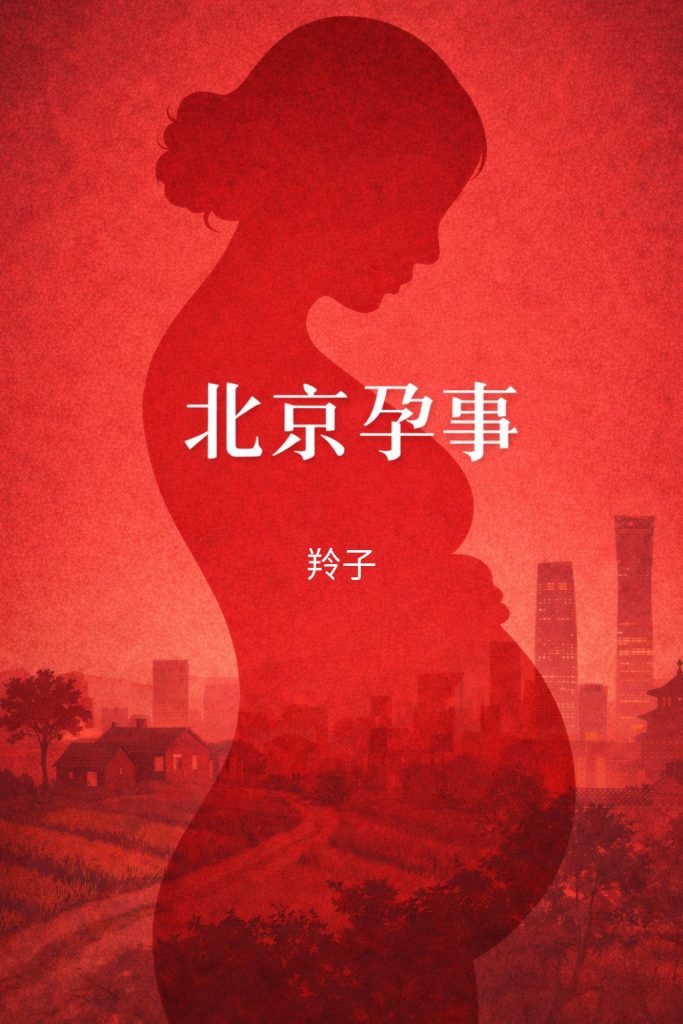
Beijing Pregnancy Stories
A Narrative Reflection on Reproductive Experience Under China’s One-Child Policy
Published: September 2014
Republished: January 2026
Available on Amazon: Amazon link
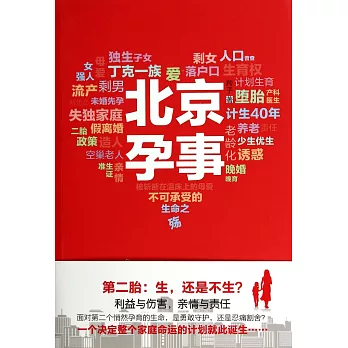
《北京孕事》2014年9月出版 2026年1月再版
电子书链接: eBook link
Opening Statement
Behind the One-child policy stand living men and women, trembling decisions, families reshaped by fear, silence, or resistance. This book is not a theoretical study. It is a narrative witness.
Originally published in 2014, Beijing Pregnancy Stories was one of the earliest narrative works to reflect critically on reproductive life under China’s family-planning regime.
Over three decades of policy intervention reshaped not only demographic structure but also people’s understanding of family, responsibility, and the meaning of birth. The shift from “restricted fertility” to “reluctant fertility” represents a deeper cultural transformation.
The 2026 edition revisits these questions in light of today’s global low-fertility crisis, inviting readers to reconsider the ethical and human dimensions behind demographic change.
Impact & Response
One reader once told me:
She had planned to terminate an unexpected pregnancy.
After reading this book, she changed her decision.
Today, that boy is ten years old.
This story alone became one of the reasons for its republication.
After reading this book, she changed her decision.
Today, that boy is ten years old.
Preface to the Revised Edition
A woman I had never met once came to thank me. While she was planning to terminate an unintended pregnancy, she happened upon Beijing Pregnancy. After reading it, she changed her mind and chose to keep the child.
Today, that boy is ten years old.
This is one of the driving forces behind the republication of Beijing Pregnancy. Another is a “reminder” I received last year: that one should not speak of “reflection” when it comes to the family planning policy.
On the contrary, I believe this is a topic that demands reflection more than any other.
When the One-Child Policy was rescinded in January 2016, the public response was not as enthusiastic as the authorities had anticipated. Thirty-plus years of family planning have fundamentally altered people’s views on life and reproduction. The shift from being forbidden to give birth to not wanting to give birth—from coerced contraception to voluntary “lying flat”—represents a profound societal sorrow.
As birth rates plummet, population aging accelerates, and family structures are torn apart, we are finally beginning to realize the staggering costs. To rebuild upon the ruins, reflection is not just necessary; it is inescapable.
Beijing Pregnancy is the first work to use the form of documentary fiction to deeply reflect on the One-Child Policy. These true stories and exposed scars touch the deepest parts of our humanity, prompting us to reconsider the value of life. The policy has changed and society has transformed, but should the tears shed and the blood spilled be forgotten? As the One-Child Policy becomes a thing of the past, do we have the courage to look back and draw lessons from history?
Today, Beijing Pregnancy meets its readers in a new form. My hope is that it helps us remember the stories swept away by the torrents of the era and urges us to maintain reverence and honesty when facing life itself.